The Three-Year Pension Allowance Reserve: A 2026/27 Carry Forward Checklist

For higher earners and business owners, the end of the tax year often prompts a familiar question: should I put more into a pension before 5 April? The answer is not simply a matter of affordability. Pension contributions benefit from tax relief, but they also count against the annual allowance. Where the current year's allowance is insufficient, carry forward may provide additional headroom. The rules are mechanical, but they depend on accurate records and a clear understanding of which years remain available.
What carry forward actually does
The standard annual allowance for pension contributions is £60,000 for 2026/27. That figure covers the total of employee contributions, employer contributions and any third-party contributions made on the member's behalf. It is not a personal contribution limit in the narrow sense; it is a limit on the pension input for the year.
Carry forward allows a taxpayer to use unused annual allowance from the previous three tax years. For contributions made in 2026/27, the relevant years are 2023/24, 2024/25 and 2025/26. The current year's allowance is used first. Only once that is exhausted can earlier years be drawn upon, and the earliest available year is used first.
There is an important condition. The individual must have been a member of a registered pension scheme in the year from which the unused allowance is carried forward. Membership is enough for this purpose; large contributions in that earlier year are not required. However, the calculation must reflect the actual pension input for each year, including defined benefit accrual where relevant.
Why the tapered annual allowance matters
For those with high income, the standard £60,000 figure may not apply. The tapered annual allowance reduces the allowance where adjusted income exceeds £260,000 and threshold income exceeds £200,000. Broadly, the allowance falls by £1 for every £2 of adjusted income above £260,000, down to a minimum of £10,000.
This matters for carry forward because unused allowance from an earlier year must be calculated using the allowance that actually applied in that year, not the standard figure. A taxpayer who was subject to tapering in 2024/25, for example, cannot treat the whole £60,000 as available for carry forward if the tapered allowance was lower. The same logic applies to 2023/24 and 2025/26.
Adjusted income and threshold income are not the same as taxable income on a P60. They include certain pension contributions and other adjustments. Anyone close to the thresholds should calculate both figures carefully before assuming that a large top-up will be covered by carry forward.
Employer contributions are part of the picture
It is a common misconception that employer contributions sit outside the annual allowance. They do not. An employer contribution to a registered pension scheme counts towards the member's annual allowance, even though the member does not receive the contribution as salary. This can catch out owner-managers who pay themselves a modest salary and take larger employer pension contributions instead.
For carry forward planning, the total pension input for each year must include all contributions, regardless of who paid them. If an employer has already made substantial contributions in 2026/27, the remaining headroom may be smaller than expected. Conversely, where employer contributions have been low in earlier years, there may be more unused allowance to carry forward, subject to the membership condition and the tapered allowance calculation.
Records that support a carry forward claim
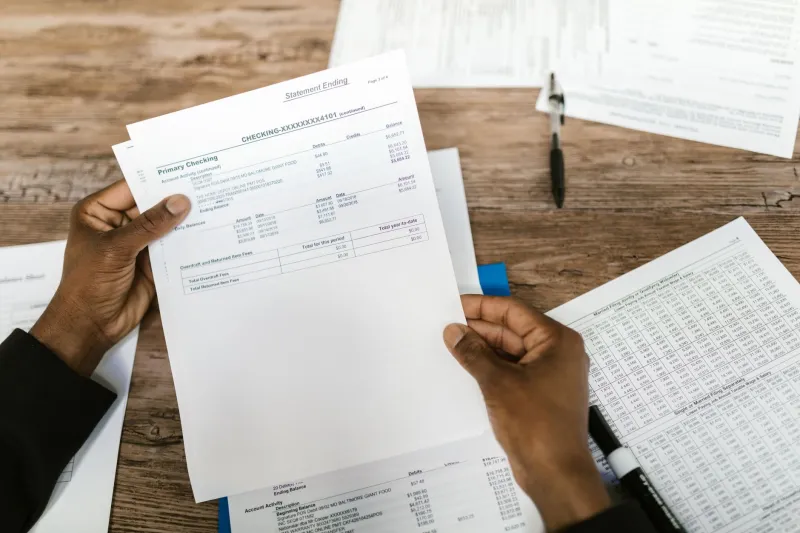
Carry forward is not usually claimed through a separate form. It is reflected in the pension contributions made and, where necessary, in the self-assessment return. The practical risk is not the absence of a form; it is the absence of evidence. HMRC can ask questions, and pension providers may need confirmation that contributions are within the available allowance.
A sensible record set includes:
- Annual allowance statements from each pension scheme for 2023/24, 2024/25 and 2025/26.
- Pension contribution records showing the date and amount of each contribution, including employer contributions.
- P60s and payslips for the relevant years, particularly where income approached the taper thresholds.
- Self-assessment returns and tax calculations for earlier years.
- Defined benefit pension input amounts, where applicable.
- Correspondence with advisers or providers about relief at source, net pay arrangements or scheme pays.
Records should be retained for the usual period after the relevant tax year. Pension records can be complex, so keeping them together in one file is more useful than relying on provider portals that may change over time.
A practical checklist before 5 April 2027
First, establish the total pension input for 2026/27 so far. Include personal contributions, employer contributions and any contributions made by someone else on the member's behalf.
Second, confirm the annual allowance that applies for 2026/27. If income is anywhere near the taper thresholds, calculate adjusted income and threshold income rather than estimating.
Third, calculate unused allowance for 2023/24, 2024/25 and 2025/26 using the allowance that applied in each year. Do not assume that the full standard allowance was available.
Fourth, check that the individual was a member of a registered pension scheme in each year from which allowance is being carried forward.
Fifth, decide whether a top-up is worthwhile after considering the tax relief and any annual allowance charge. Tax relief at the marginal rate can make a contribution attractive, but exceeding the allowance can trigger a charge that reduces the benefit. For some taxpayers, scheme pays may be available where the charge exceeds £2,000, but the conditions should be checked with the scheme.
Finally, leave enough time for the contribution to be processed before 5 April 2027. A payment made after the deadline falls into the next tax year, even if it relates to an earlier decision.
The bottom line
Carry forward is a useful reserve, but it is not a free pass. It depends on unused allowance from specific years, the right scheme membership and an accurate calculation of tapered allowances where high income is involved. For anyone considering a pension top-up before the end of 2026/27, the safest approach is to gather the records first, calculate the headroom second and contribute third. That order turns a year-end impulse into a defensible tax decision.